

Title: Beyond Low-Pass: The Evolution of Guided-Wave Technologies Toward All-Pass Integrated Circuits and Systems
Ke WU
Institute for Wireless Intelligence (IWS), Chengdu, China
Poly-Grames Research Center and Electrical Engineering Department
Polytechnique Montréal (University of Montreal), Canada
FIEEE, FCAE, FRSC, Facatech
Biography
Dr. Ke Wu is the Industrial Research Chair in Future Wireless Technologies and a Professor of Electrical Engineering at Polytechnique Montréal (University of Montreal). He has published more than 1,500 technical papers, contributed numerous books and book chapters, and holds over 90 patents. He has played key leadership roles in major international conferences, including serving as General Chair of the 2012 IEEE International Microwave Symposium and General Co-Chair of the 2025 IEEE International Symposium on Antennas and Propagation. Dr. Wu was President of the IEEE Microwave Theory and Technology Society (MTT-S) in 2016 and served as the inaugural North American representative to the General Assembly of the European Microwave Association (EuMA). He has received numerous awards and distinctions and has served as an IEEE MTT-S Distinguished Microwave Lecturer. Dr. Wu is a Fellow of the IEEE, the Canadian Academy of Engineering, the Academy of Science of the Royal Society of Canada, and the German Academy of Science and Engineering (acatech).
Abstract
RF/microwave electronics and photonics, particularly analog low-pass and band-pass technologies, are rapidly advancing into the millimeter-wave and terahertz regimes, driven by emerging 6G demands. In parallel, the shift toward terabyte- and petabyte-scale digital systems is propelled by the need for seamless AI-driven data connectivity and efficient operation. In this context, ultrafast electronics has become a key driver for next-generation all-pass guided-wave structures. This talk opens with an overview of low-, band-, and high-pass transmission lines and guided-wave structures for nanosecond-scale applications, followed by an examination of low-pass, high-density IC techniques, emphasizing the fundamental limits of microstrip technologies and microscale EMC challenges in dense integration. State-of-the-art substrate integration approaches, spanning metallic and dielectric topologies, are reviewed with focus on transmission loss and integration density. Emerging waveguide architectures and integration strategies are then presented, supported by theoretical and experimental results. High-density ICs and interconnects are enabled through the heterogeneous integration of metallic and dielectric waveguides within unified platforms, supporting both TEM and non-TEM modes, with packaging and interconnect techniques also addressed. Finally, mode composition and selectivity are discussed for DC-to-THz systems, targeting picosecond ultrafast and ultra-broadband all-pass operation. The presentation concludes by suggesting that the unification of electronic and photonic systems may ultimately be achieved through a single all-pass transmission architecture spanning the entire electromagnetic spectrum of interest.

Title: The Importance of the Research in Advanced Electromagnetics for 5G and 6G Wireless Communication Systems: an Industry View
Renato LOMBARDI
Director, Milan Research Center
Huawei Fellow
Biography
Renato Lombardi is Director of Huawei Italy Research Center and Vice President of Huawei’s Microwave Product Line. In these roles, he oversees the research and development of microwave / millimeter-wave technologies for wireless communications and the implementation of innovative mobile broadband backhauling solutions all over the world.
Renato Lombardi joined Huawei in 2008, founding the Huawei Research Center in Milan, Italy. In 2011, he was awarded the title of “Fellow of Huawei for Microwave”.
Renato has more than 30 years of experience in the microwave and millimeter-wave industry. He previously led the Siemens’ Microwave Business and Product Management, and in 2006, was appointed Director of Research and Development.
In 2015 Renato Lombardi has been elected as Chair of the ETSI Industry Study Group mWT (millimeter-Wave Transmission). He serves Member of the Board of the European Microwave Association as an industry representative.
Abstract
The invited talk start analyzing the most important requirements of mobile networks evolving from 5 to 6G and how those drive the trends and technology for radio access and wireless backhaul products and solutions:
▪ Application scenarios and frequency bands for 5G and 6G access and backhaul
- low bands and medium bands
- cm-wave and mmw bands
- sub-THz
▪ Massive MIMO architectures comparison
▪ How backhaul can meet the demand of capacity and network densification
Industry will face additional challenges to antennas design and fabrication due to the unavoidable need to use high frequencies (starting from above 6 GHz) and antenna architectures that reduce the complexity and the power consumption of the system and the digital processing part. In particular, for high frequency scenarios, the growth of system’s frequency corresponds to a growth of antenna complexity and cost, relative bandwidth and losses. Several challenges impact on the antenna design like sensitivity to manufactory accuracy, high integration level and distribute control points. Moreover, new problems like the harmonized co-channel coexistence between the IMT 5G systems and the fixed-satellite services will challenge the designers like never seen before in the wireless industry.
Research in Advanced Electromagnetism is fundamental to find technical and technology directions to solve the above challenges:
▪ Unconventional phased arrays and the use of meta-surfaces to achieve tight emission masks and extended field of view
▪ New beamforming techniques without phase shifters that exploit the antenna as additional element to improve performance and efficiency
▪ mm-wave and Sub-THz for Sensing and Communication Integration
▪ Smart electromagnetic environment to enhance the propagation channel
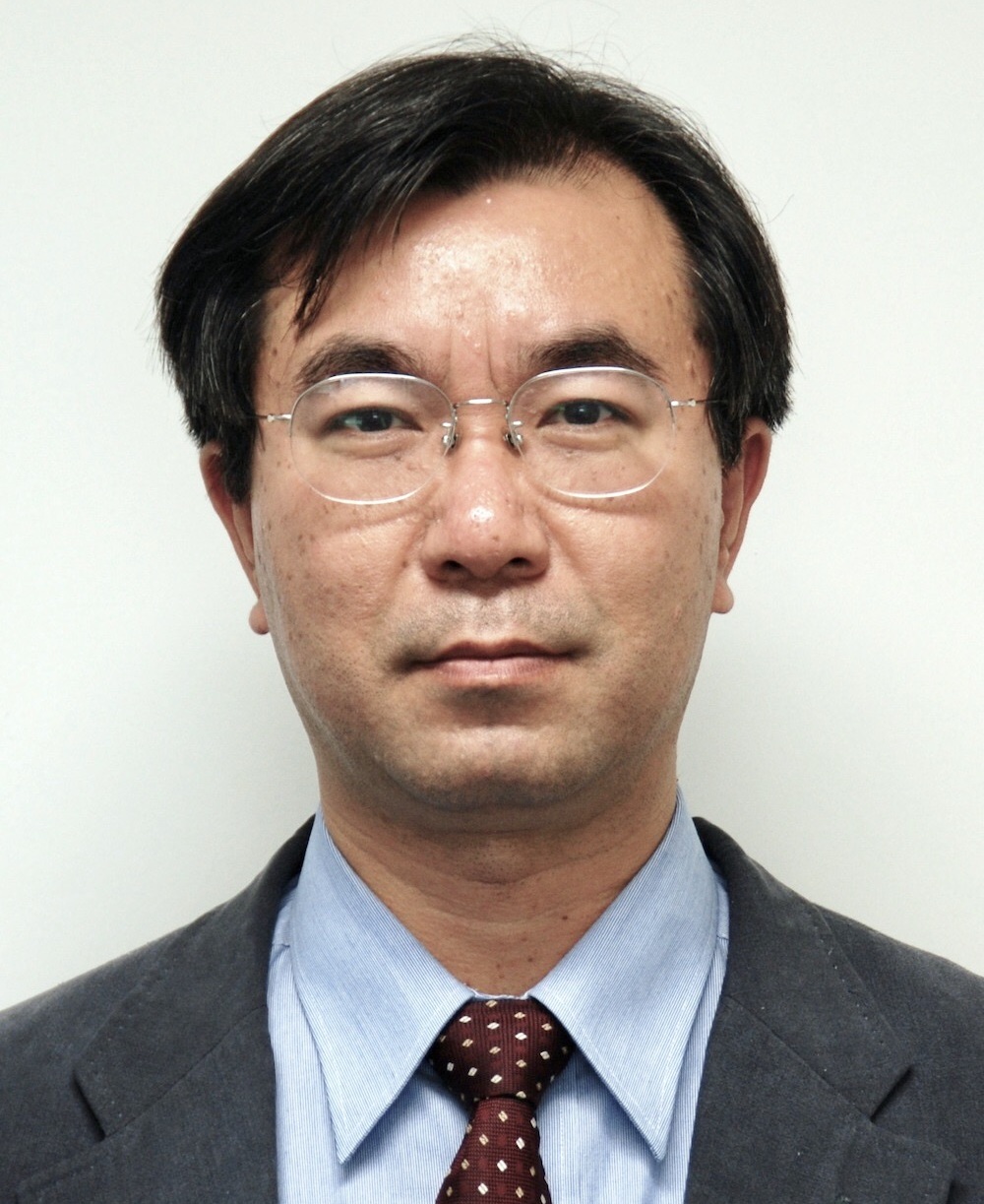
Title: Wearable Device’s EMC
Jianqing WANG
Professor, Nagoya Institute of Technology
IEEE Fellow
Biography
Jianqing Wang is a Full Professor at Nagoya Institute of Technology (NITech) and Vice Director of Center for Future Communications Research (CeFCom), NITech, Japan. He received the B.E. degree in electronic engineering from Beijing Institute of Technology, Beijing, China, in 1984, and the M.E. and D. Eng. degrees in electrical and communication engineering from Tohoku University, Sendai, Japan, in 1988 and 1991, respectively. He was a Senior Engineer with Sophia Systems Co. Ltd., Tokyo, Japan, before joining NITech, Nagoya, Japan, in 1997.
His research interests include electromagnetic compatibility and biomedical communications. He authored Body Area Communications (Wiley-IEEE) in 2012. He received the Technical Achievement Award from IEEE EMC Society in 2019. In 2021, he was elevated to IEEE Fellow for his contributions to EMC of biological and wearable/implant devices. Since 2020, he has been expanding his research area to EMC and international standardization of automotive Ethernet devices and components at CeFCom, NITech, Japan.
Abstract
This talk will first introduce our developed wearable devices such as a wearable electrocardiogram and a wearable robotic hand by combining vital sensors and human body communication technology, The basic EMI mechanism of external electromagnetic field to wearable devices will be clarified from the viewpoint of conversion from common mode to differential mode, and a countermeasure at the design stage will be shown. Moreover, an immunity test system for wearable devices will also be presented.